Comic Booklet from our Research Assistant Sinancan Kara
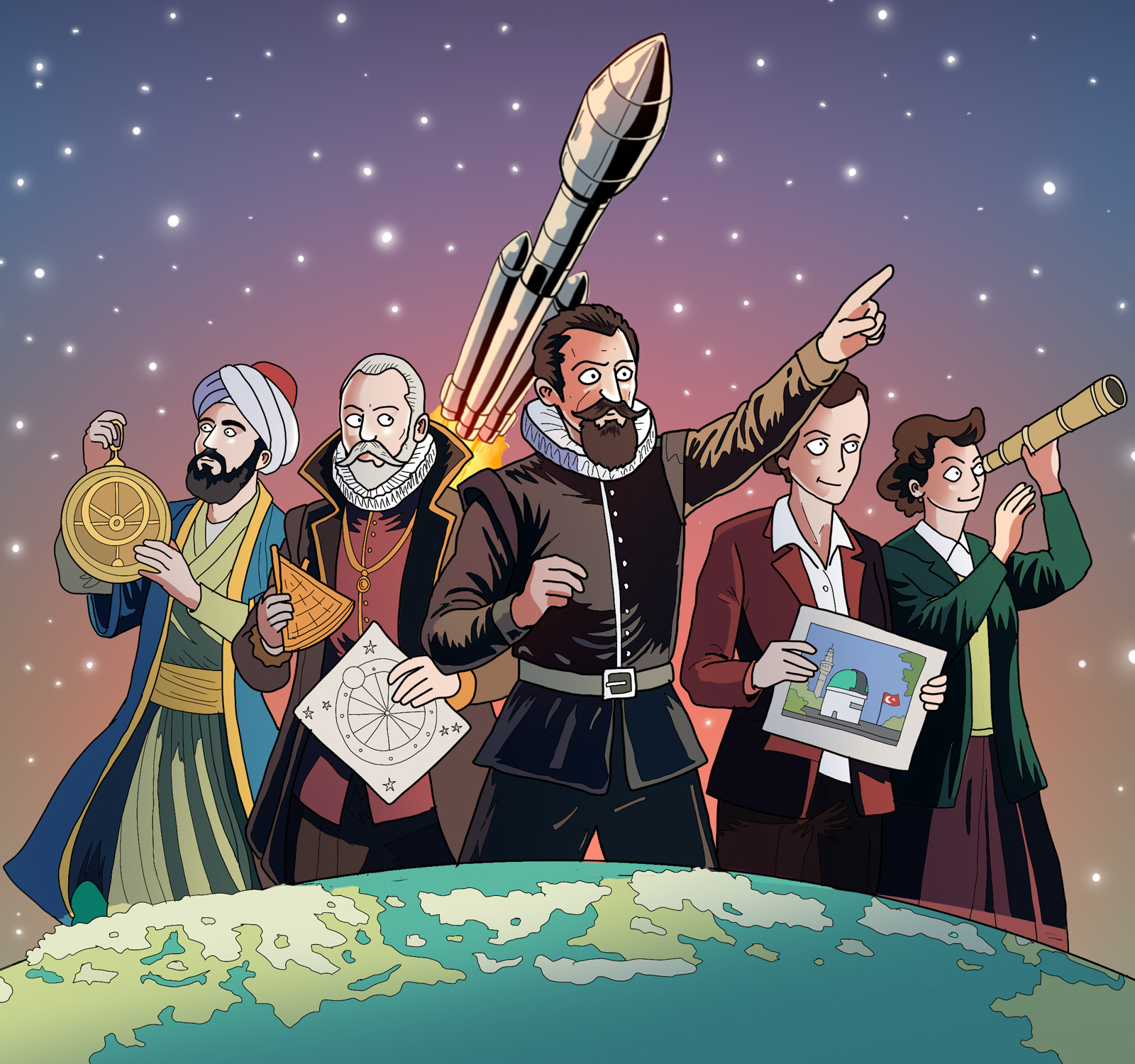
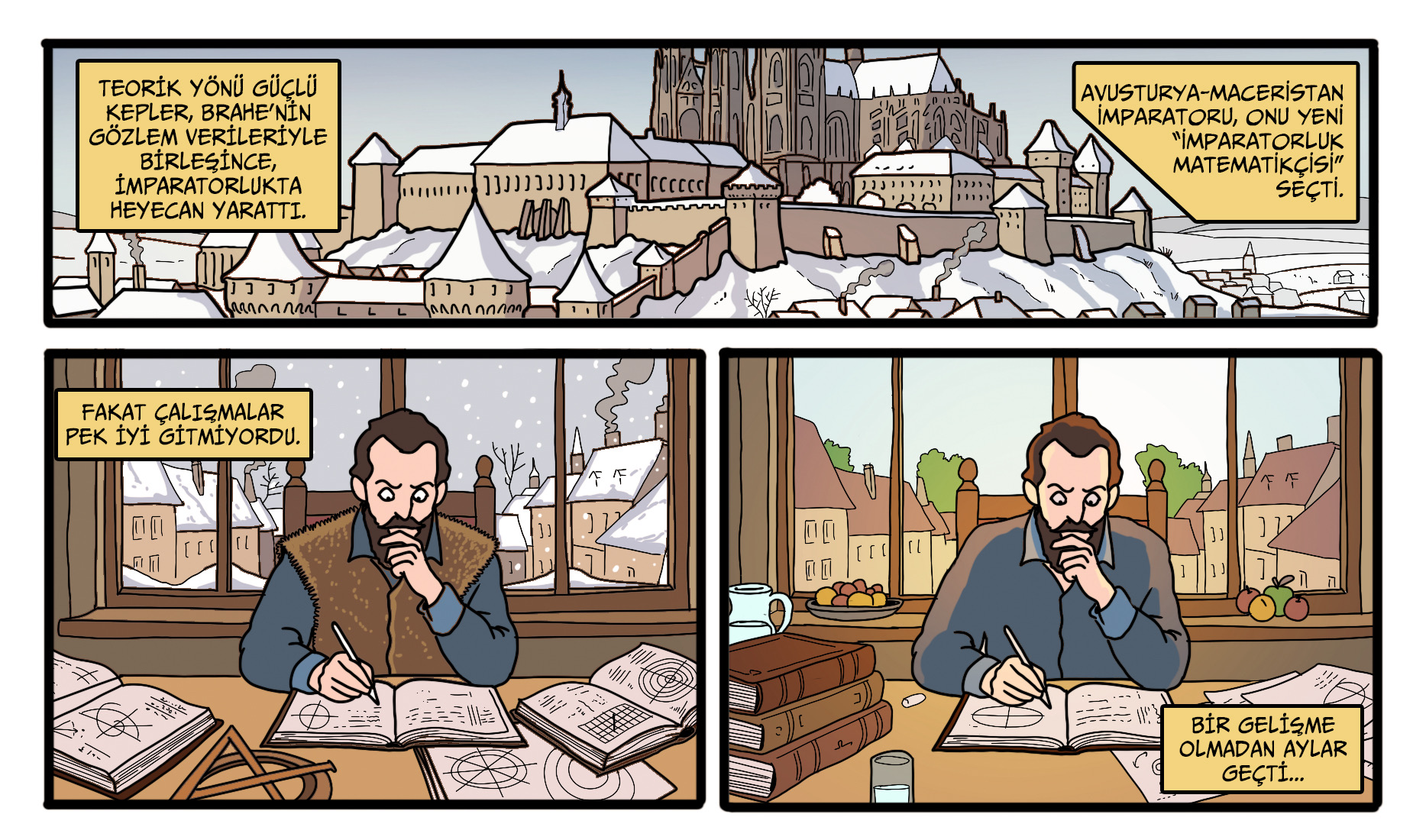
This month's August 2026 issue of TÜBİTAK Science and Technology magazine features a booklet titled "Science Comic Stories: Those Who Shaped Space Exploration and Astronomy Studies," prepared by our department's research assistant, Sinancan Kara. This 49-page comic book contains 24 stories on astronomy and space exploration, written and illustrated by Sinancan Kara since January 2017. This selection includes astronomy-themed stories such as "Tycho Brahe and Johannes Kepler," as well as cosmology-focused stories like "Pauli Dirac" and "The Eclipse That Tested the Theory of General Relativity." In addition, it features stories focusing on space exploration, primarily "The Turkish Astronaut and Scientific Mission" and "Yuri Gagarin."
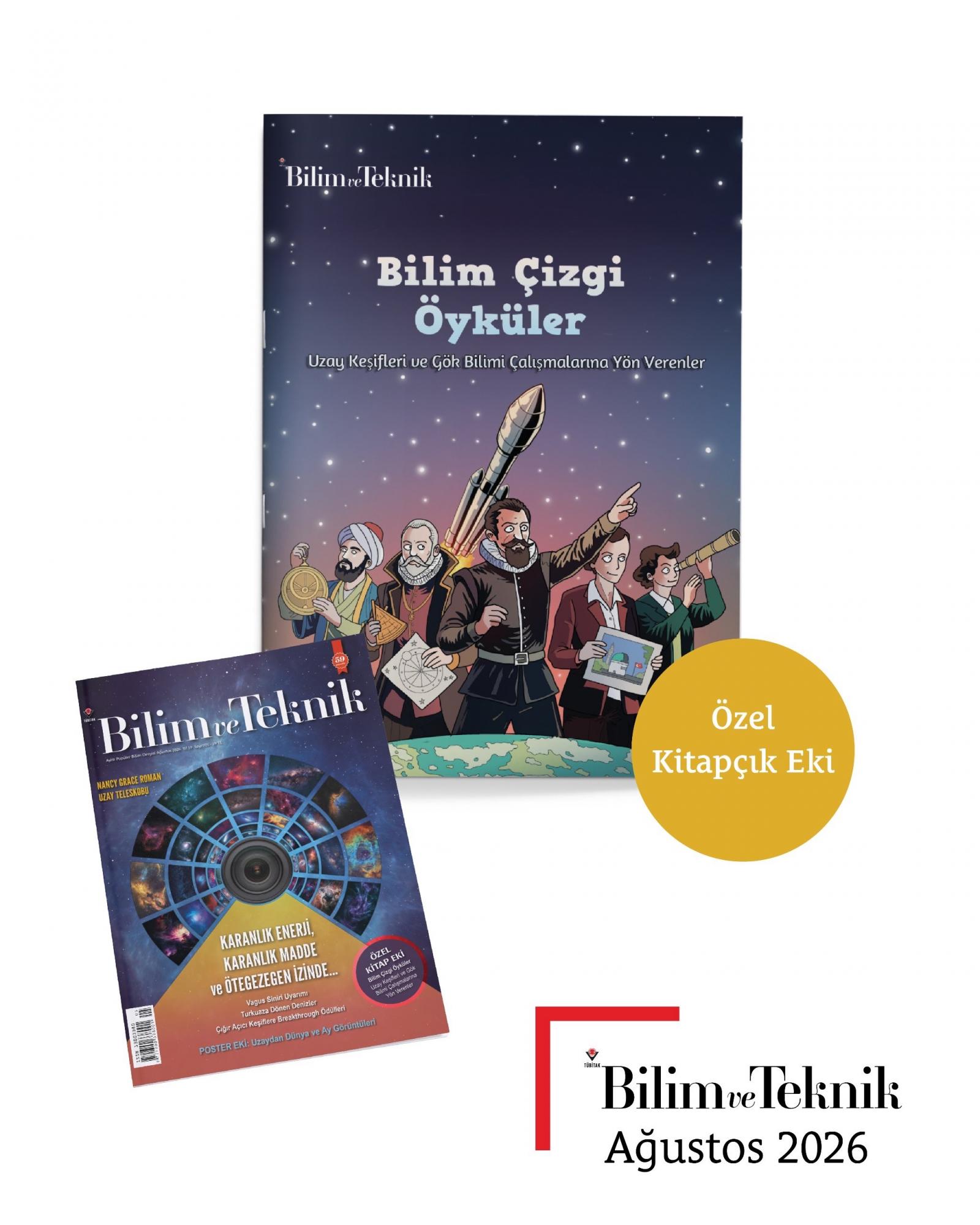
Sinancan Kara: I am a PhD candidate and research assistant in the Physics Department at Boğaziçi University. I was mentored by Nihal Ercan, a professor in our department whom we lost in July 2026, and I am currently working with Hakan Erkut. During my first years as an undergraduate in Physics at Boğaziçi University, my amateur cartoons began to be published in humor magazines. From my first year, I started taking classes from Galip Tekin, a comic artist who taught comics in our Fine Arts Department.
Unlike cartoon art, which begins and ends in a single panel and can be considered my first endeavor, writing and drawing comics is a form of drawing where storytelling is more prominent. It works like designing a film: it involves not only frame-by-frame story transitions but also technical choices such as when to switch from close-up to wide shot. I learned all of this in Galip Tekin's classes, whom we lost in July 2017; I was assisting him at the time of his death.
During my undergraduate studies in Physics at Boğaziçi, I wanted to write and draw stories related to physics and astronomy. In 2015, I created and presented a column called "The Pumpkin Family" for TÜBİTAK's Bilim Çocuk (Science for Children) magazine. Because they liked it and gave me the opportunity, I started writing and drawing this column monthly. The two-page comic strips depicted a family traveling through the Solar System in a spaceship. Each issue featured a different planet or moon in the Solar System. While the family experienced their own adventure, readers learned about the celestial body where the adventure took place. This column, which lasted two years, had to end when we ran out of celestial bodies to draw. While preparing these stories, I learned how to provide information without tiring the magazine reader by using a playful tone.
Then, in January 2017, I started creating a column for TÜBİTAK Bilim ve Teknik (Science and Technology) magazine. The aim of this column was to illustrate the stories of important figures and events not only in physics but in all branches of science. My first story depicted what happened to young Stephen Hawking during his stop in Istanbul while traveling from England to India in the 1960s. This series, which begins with Neil Armstrong, the first to set foot on the moon, and continues with Buzz Aldrin, the second to land on the moon and whose lesser-known words upon landing, has now reached 110 stories.
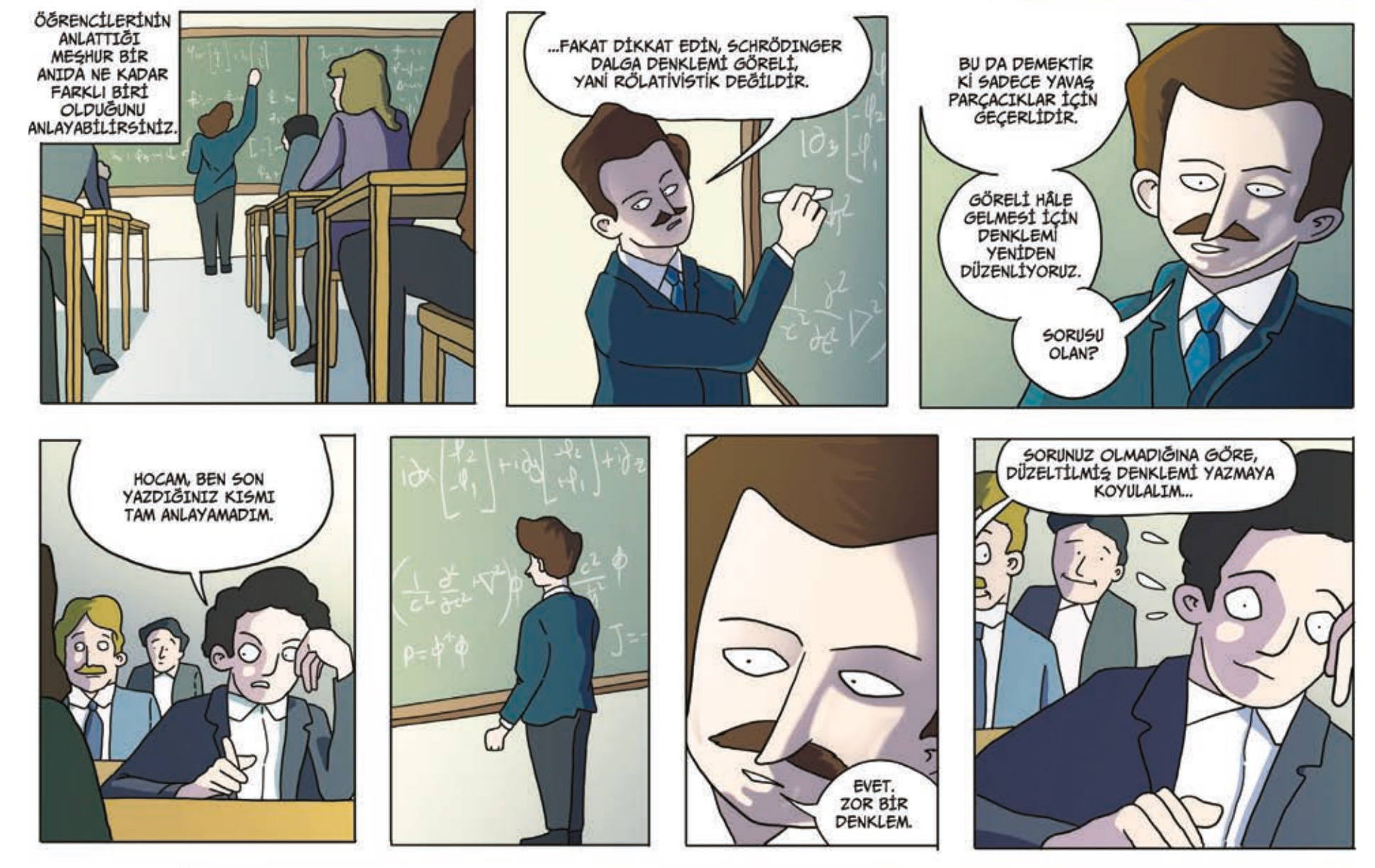
My comics have two main purposes: to convey the scientific story being told and to explain the underlying scientific concept to the reader. The first depends on storytelling skills. In my nine years and a half of experience, I've learned that there are two fundamental challenges in explaining popular science to a wide audience. The first challenge is that when the scientific content is presented in a heavily loaded way from the beginning, the reader might feel: "I probably won't understand it, but let me just glance at it." When the reader "closes their mind," they start reading with less attention to content they could understand. However, if a foundation is laid by simplifying things as much as possible from the beginning, the reader is not intimidated. When the subject is explored slowly, step by step, it can be grasped as much as possible. The second challenge is this: managing to do this process within the story without being didactic. The most lasting impact of scientific content is when the reader organically finds themselves thinking about a scientific topic without anticipating the lesson. Of course, this isn't a requirement for those already familiar with the subject or who have studied it. However, achieving this approach becomes crucial in popular science content with a very broad target audience.
My doctoral research at Boğaziçi University's Physics Department focuses on the hot, X-ray-emitting plasma gas surrounding galaxies and galaxy clusters, which constitutes the vast majority of normal matter in the universe. I study the chemical enrichment of the universe by measuring elements in hot galactic atmospheres. The only stories in the August 2026 issue of Bilim ve Teknik magazine that directly convey scientific information are also related to my field of study.
Son Güncelleme: 22:33:32 - 14.08.2026